This baseline study was commissioned by the WFP Ethiopia Country Office for the U.S. Department of Agriculture (USDA) McGovern-Dole International Food for Education and Child Nutrition project in Ethiopia, which builds on prior USDA support to Ethiopia and runs from September 2024 to December 2029.
This market monitoring update bulletin presents the latest data on food prices and market functionality across the ten provinces participating in the Home-Grown School Feeding Programme, supporting a fair and competitive bidding process for food suppliers and informing price trends relevant to programme implementation.
The terms of reference (TOR) aim to inform stakeholders about the evaluation, clarify expectations and requirements and guide the evaluation team in its work during the various phases of the evaluation.
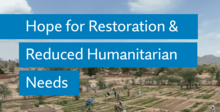
Over the last five years, WFP and partners have restored over 325,000 hectares across the Sahel, transforming the lives of 4.2 million people in over 3,000 villages. This progress has improved food availability, nutrition and resilience against economic shocks – reducing the need for humanitarian assistance.
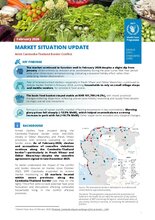
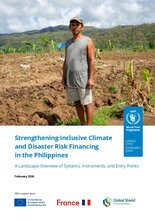
As the world’s most disaster‑prone country, the Philippines faces recurring climate shocks straining public finances, disrupt food systems, and negatively impact poor households, particularly at-risk communities. Delays in financing amplify these impacts, raise humanitarian costs and force families into harmful coping strategies that deepen food insecurity. Climate disaster risk financing and insurance (CDRFI) helps protect climate-vulnerable communities by encouraging early and proactive action, provide fast and reliable funding, and build long-term climate resilience.
Recent policy and legal reforms mark important steps forward, including the passage of Republic Act 12287 (Anticipatory Action Law) in 2025 which enables government funds to be mobilized before disasters strike, and the ongoing revision of the National Disaster Risk Financing and Insurance Strategy. Drawing on its engagement in anticipatory action, cash transfers and shock‑responsive social protection with the Government, WFP Philippines provides operational insights into how pre‑arranged financing can deliver timely support for people and food systems. This publication seeks to support dialogue and strengthen collaboration with donors and development partners in advancing inclusive CDRFI in the Philippines.
The terms of reference (TOR) aim to inform stakeholders about the evaluation, clarify expectations and requirements and guide the evaluation team in its work during the various phases of the evaluation.
This interactive story explores how land restoration in Chad is helping reduce humanitarian needs while strengthening food security, livelihoods and long-term resilience. As you scroll, you will see how proven, community-driven solutions are bringing degraded agricultural and pastoral land back to life by restoring soil health, increasing vegetation cover and improving water management in some of the Sahel’s most fragile environments.
Discover how simple but scalable approaches, strong national partnerships and local knowledge are already transforming landscapes and lives and in Chad.
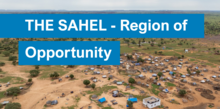
This Sway document introduces the Sahel Resilience Partnership (SRP) and showcases its work through photos and videos from the field.
Financed by BMZ and jointly implemented by WFP, UNICEF, and GIZ, the SRP operates in Mauritania, Mali, Burkina Faso, Niger, and Chad. The partnership strengthens food and nutrition security, climate resilience, ecosystem restoration, social services, and social cohesion, while promoting gender equality, disability inclusion, and youth empowerment
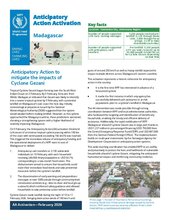
On 9 February, the Anticipatory Action (AA) activation threshold (a forecast of an intense tropical cyclone passing within 100 km of the coast with wind speeds exceeding 166 km/h) was reached. This triggered the immediate release of anticipatory funding and the operational deployment of a WFP team to east of Madagascar.
This decentralized evaluation was commissioned by the WFP Moldova country office and covers the Cash Based Transfers and Social Protection Activities in Transitioning Emergency Assistance to National Systems and Preparing for a Responsible Exit in Moldova, March 2022 to February 2026.
The terms of reference (TOR) aim to inform stakeholders about the evaluation, clarify expectations and requirements and guide the evaluation team in its work during the various phases of the evaluation.
The terms of reference (TOR) aim to inform stakeholders about the evaluation, clarify expectations and requirements and guide the evaluation team in its work during the various phases of the evaluation.
The terms of reference (TOR) aim to inform stakeholders about the evaluation, clarify expectations and requirements and guide the evaluation team in its work during the various phases of the evaluation.
The terms of reference (TOR) aim to inform stakeholders about the evaluation, clarify expectations and requirements and guide the evaluation team in its work during the various phases of the evaluation.